Noorani Qaida PDF: Read the Full Qaida Online and Download Free
Noorani Qaida (نورانی قاعدہ, also called Qaida Noorania) is the beginner's book used across Pakistan, India, the UK and the USA to teach children and adults to read the Quran with correct pronunciation. It moves in 16 lessons, called takhtis, from the single Arabic letters to joined letters, Harakat, Tanween, Madd, Sukoon and Tashdeed, and finishes with real Quranic lines. Below you can read every page of the colour-coded Tajweedi Noorani Qaida in high resolution, open any single page, or download the complete PDF free.
Read Noorani Qaida online: all 32 pages
Tap any page to open it in full HD with lesson notes and practice tips. Each page has its own link, so you can bookmark the page your child is on.
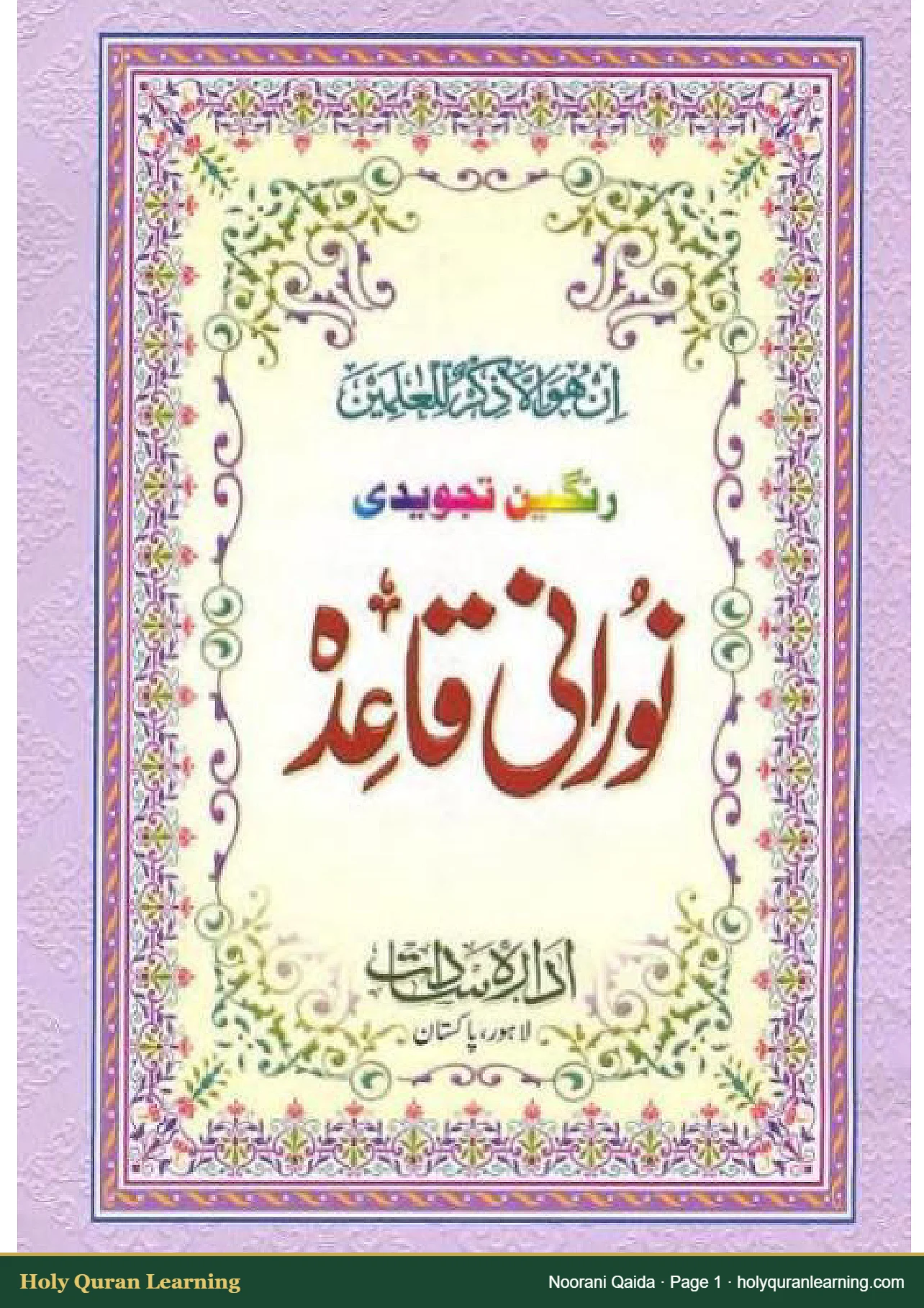
 Page 1Cover
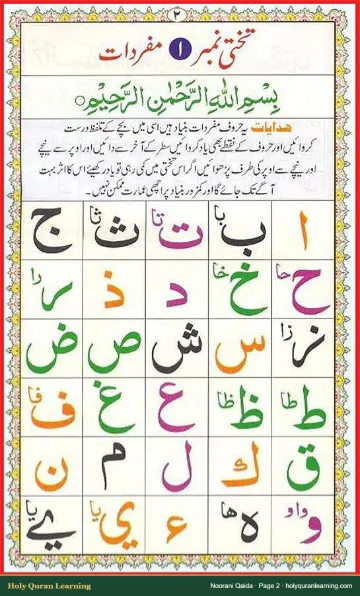 Page 2Single letters
 Page 3Joined letters
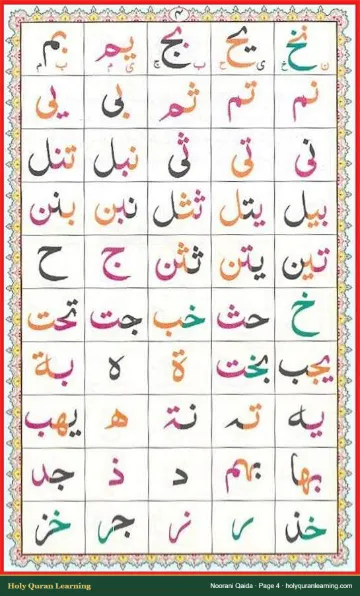 Page 4Joined letters
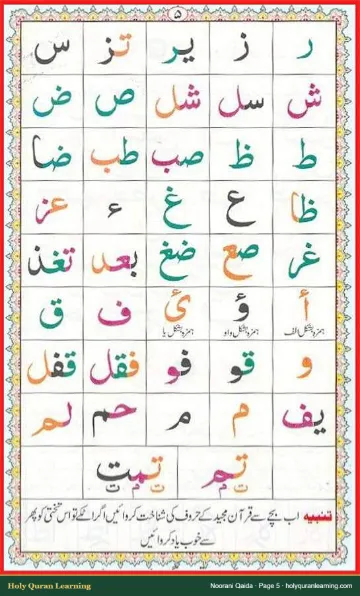 Page 5Joined letters
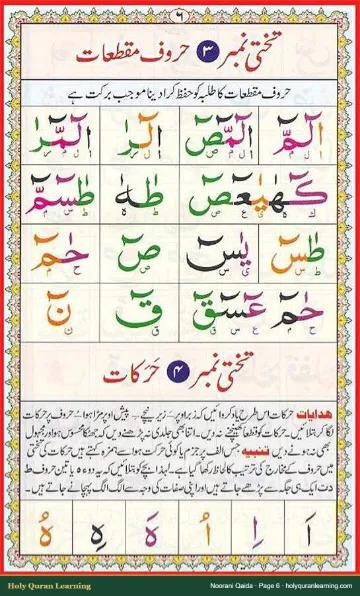 Page 6Muqatta'at letters and Harakat
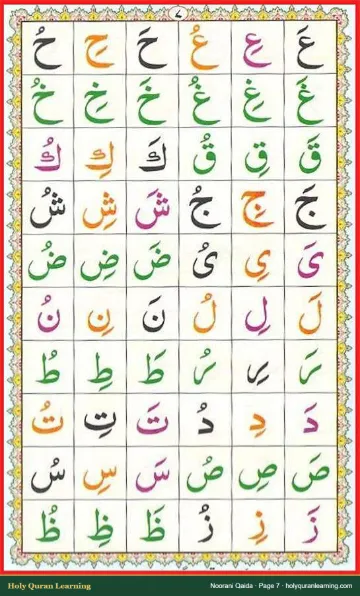 Page 7Harakat
 Page 8Harakat and Tanween
 Page 9Tanween
 Page 10Harakat and Tanween practice
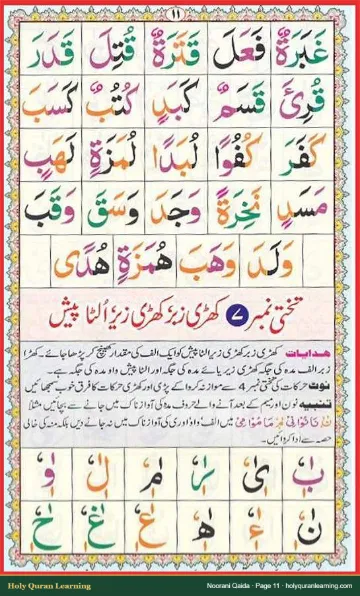 Page 11Harakat and Tanween practice and Standing vowels
 Page 12Standing vowels and Madd and Leen letters
 Page 13Madd and Leen letters
 Page 14Madd and Leen letters
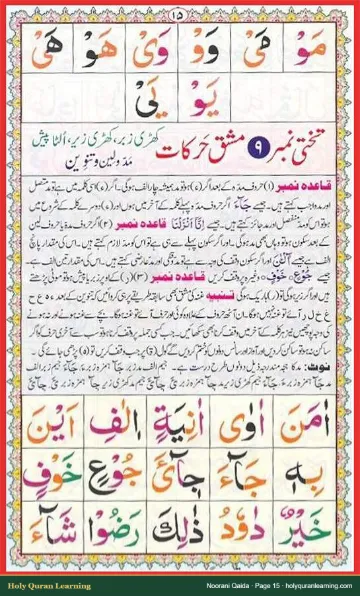 Page 15Madd and Leen practice
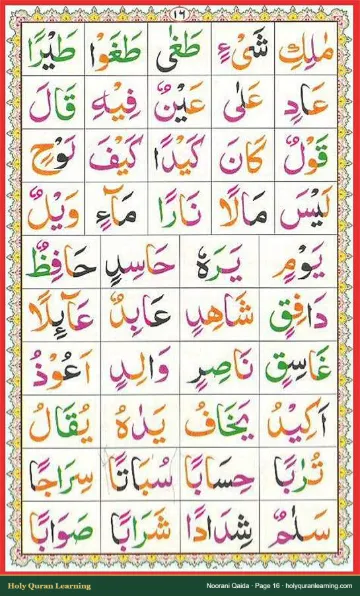 Page 16Madd and Leen practice
 Page 17Madd and Leen practice
 Page 18Madd and Leen practice and Sukoon (Jazm)
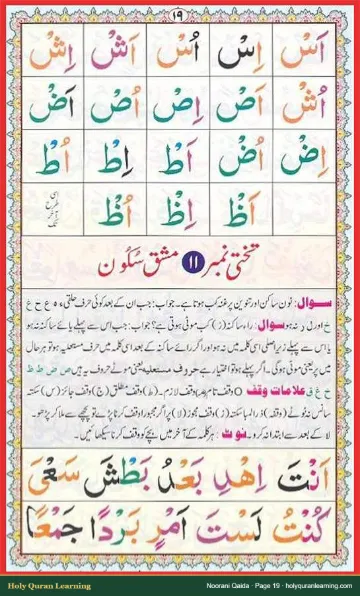 Page 19Sukoon (Jazm) and Sukoon practice
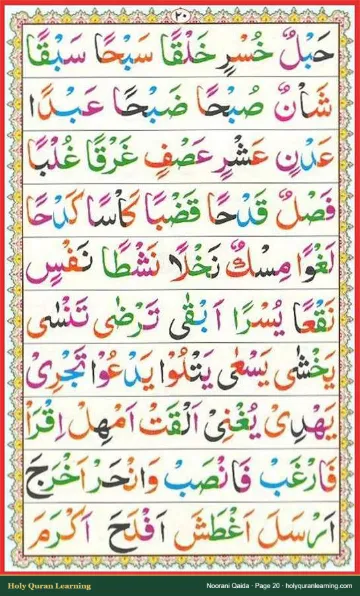 Page 20Sukoon practice
 Page 21Sukoon practice
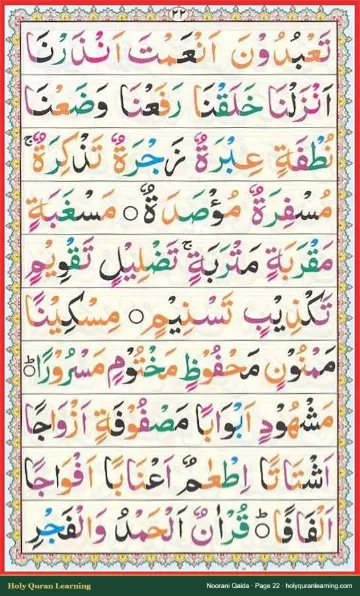 Page 22Sukoon practice
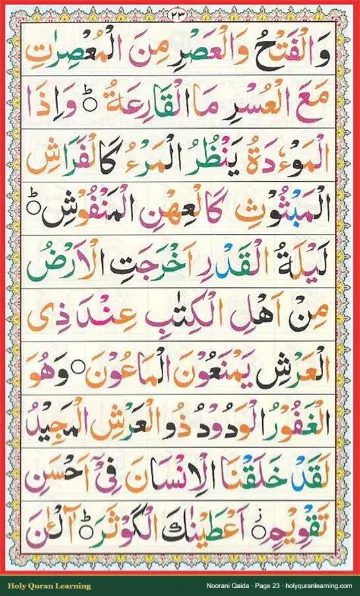 Page 23Sukoon practice
 Page 24Tashdeed
 Page 25Tashdeed and Tashdeed practice
 Page 26Tashdeed practice
 Page 27Tashdeed practice and Tashdeed with Sukoon
 Page 28Tashdeed with Sukoon and Tashdeed after Tashdeed
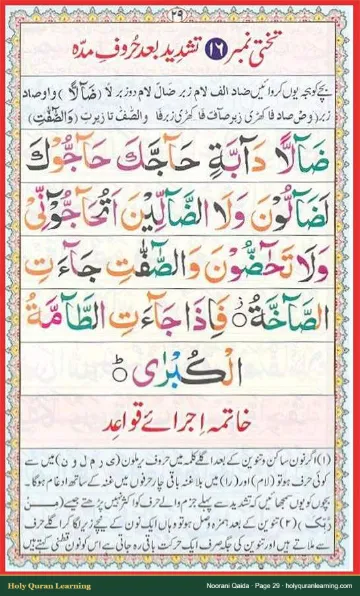 Page 29Tashdeed after Tashdeed and Tashdeed after Madd
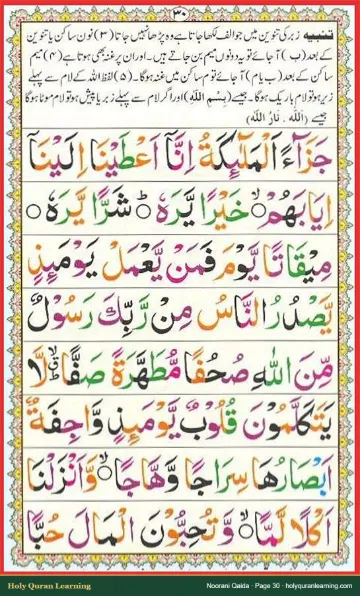 Page 30Quran reading practice
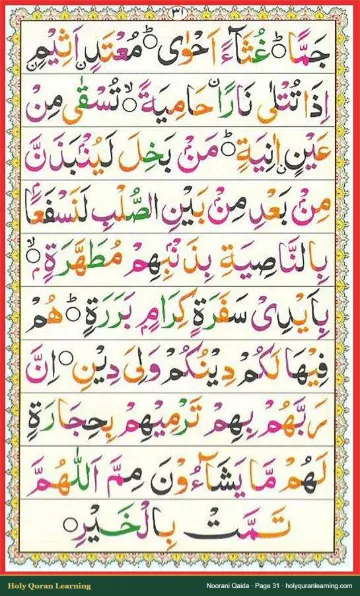 Page 31Quran reading practice
 Page 32Rules summary
Noorani Qaida lessons (takhtis) and their pages
The Qaida has 16 lessons. Each one adds a single new rule, so a student never meets two new ideas at once.
| Takhti | Lesson | What it teaches | Pages |
|---|---|---|---|
| 1 | Huroof Mufradat (single Arabic letters) حروفِ مفردات | Takhti 1 teaches the 29 single letters of the Arabic alphabet, from Alif to Ya, each pronounced from its own point of articulation (makhraj). | 2 |
| 2 | Huroof Murakkabat (joined letters) حروفِ مرکبات | Takhti 2 shows how Arabic letters change shape when they join. | 3, 4, 5 |
| 3 | Huroof Muqatta'at (abbreviated letters) حروفِ مقطعات | Takhti 3 covers the Huroof Muqatta'at, the separate letters that open 29 surahs of the Quran, such as الٓمّٓ (Alif Lam Meem), يسٓ (Ya Seen), طه (Ta Ha), حمٓ (Ha Meem) and كٓهيٰعٓصٓ (Kaf Ha Ya Ain Sad). | 6 |
| 4 | Harakat (Zabar, Zer and Pesh) حرکات | Takhti 4 introduces the three short vowels: Fatha (Zabar) gives an "a" sound, Kasra (Zer) gives an "i" sound and Damma (Pesh) gives a "u" sound. | 6, 7, 8 |
| 5 | Tanween (double vowels) تنوین | Takhti 5 teaches Tanween, the double vowel marks at the end of a word. | 8, 9 |
| 6 | Mashq Harakat o Tanween (practice) مشق حرکات و تنوین | Takhti 6 is the first real reading practice. | 10, 11 |
| 7 | Khari Harakat (standing vowels) کھڑی حرکات | Takhti 7 teaches the standing vowels: the standing Fatha (Khara Zabar), standing Kasra (Khari Zer) and inverted Damma (Ulta Pesh). | 11, 12 |
| 8 | Huroof Madda o Leen (long and soft vowels) حروفِ مدہ و لین | Takhti 8 explains the letters of Madd and Leen. | 12, 13, 14 |
| 9 | Mashq Harakat, Madd and Leen (practice) مشق | Takhti 9 mixes everything learned so far, short vowels, Tanween, Madd and Leen, into real Quranic words. | 15, 16, 17, 18 |
| 10 | Sukoon or Jazm سکون / جزم | Takhti 10 introduces Sukoon (Jazm), the sign that shows a letter has no vowel. | 18, 19 |
| 11 | Mashq Sukoon (Sukoon practice) مشق سکون | Takhti 11 gives extended practice of Sukoon with words taken from the Quran, many from the last para (Juz Amma). | 19, 20, 21, 22, 23 |
| 12 | Tashdeed (Shaddah) تشدید | Takhti 12 teaches Tashdeed (Shaddah), the sign that doubles a letter. | 24, 25 |
| 13 | Mashq Tashdeed (Tashdeed practice) مشق تشدید | Takhti 13 is practice of Tashdeed in words and short Quranic phrases, so that doubling a letter becomes automatic during normal reading.. | 25, 26, 27 |
| 14 | Tashdeed ma' Sukoon (Shaddah with Sukoon) تشدید مع سکون | Takhti 14 combines Tashdeed with Sukoon in the same word. | 27, 28 |
| 15 | Tashdeed ma' Tashdeed (Shaddah after Shaddah) تشدید مع تشدید | Takhti 15 practises words where one Tashdeed comes straight after another, a pattern found often in the Quran. | 28, 29 |
| 16 | Tashdeed after Huroof Madda (Madd before Shaddah) تشدید بعد حروفِ مدہ | Takhti 16, the last lesson, teaches a Tashdeed that comes straight after a letter of Madd, as in وَلَا الضَّآلِّيْنَ and الطَّآمَّةُ. | 29 |
| Final Quran reading practice اختتام | The closing pages bring every rule together in full lines from the Quran, mostly from Juz Amma, with a few important reminders about Noon Saakin, Tanween, Meem Saakin and the heavy or light Lam in the name Allah. | 30, 31 |
How to learn Noorani Qaida step by step
- Learn the makharij first. Say each single letter from its correct point in the throat, tongue or lips before moving on.
- One page at a time. Read a page until it is smooth without spelling, then move to the next. Never skip a takhti.
- 15 to 20 minutes a day. Short daily practice works far better than one long weekly lesson, especially for children.
- Read to a teacher. Tajweed is learned by listening and correction. A teacher catches mistakes a book cannot.
- Revise every week. Go back to older pages each Friday so earlier rules stay strong.
For a full plan with common mistakes, read our guide to learning Noorani Qaida lesson by lesson.
Noorani Qaida PDF download details
| File | noorani-qaida.pdf |
| Size | 2.8 MB |
| Pages | 32, full colour |
| Edition | Rangeen (colour-coded) Tajweedi Noorani Qaida with Urdu instructions |
| Price | Free, no sign up |
| Printing | Prints well on A5 or A4 in colour; colour matters because it marks the Tajweed rules |
Prefer English instructions? Use the Noorani Qaida in English PDF, which follows the same lessons.
Noorani Qaida, Madani Qaida or Iqra: which one?
Noorani Qaida is the most widely used beginner book in South Asia and among South Asian families in the UK and USA, and it moves through the rules in 16 short lessons. Madani Qaida follows a similar path with a different layout and is common in some madrasas. Iqra is a multi-book series. All three lead to the same goal, so the best choice is the one your teacher uses. Children who finish any of them can start reading the Quran from Juz Amma.
Noorani Qaida FAQs
What is Noorani Qaida?
Noorani Qaida is a beginner's book that teaches how to read the Quran with correct pronunciation. It starts with the single Arabic letters and moves through joined letters, Harakat, Tanween, Madd, Sukoon and Tashdeed in 16 lessons.
Who wrote Noorani Qaida?
Noorani Qaida is attributed to Sheikh Noor Muhammad Haqqani of Ludhiana, after whom it is named. Many publishers now print their own colour-coded editions of his method.
How many pages and lessons are in Noorani Qaida?
This edition has 32 pages and 16 lessons (takhtis), followed by final Quran reading practice.
Is the Noorani Qaida PDF free?
Yes. You can read every page online and download the full PDF free, with no sign up.
How long does it take to finish Noorani Qaida?
Most children finish in 3 to 6 months with 15 to 20 minutes of daily practice and a teacher. Adults often finish in 2 to 3 months.
Can adults learn Noorani Qaida?
Yes. Noorani Qaida works for any age. Adults usually move faster because they can follow the rules, especially with a one to one teacher.
What comes after Noorani Qaida?
After the Qaida, students start reading the Quran, usually from Juz Amma, while learning Tajweed rules in more depth.
Why is the Noorani Qaida colour coded?
The colours help beginners notice sounds and Tajweed rules at a glance, so they learn correct pronunciation from the very first page.
Learn Noorani Qaida with a teacher, one to one
Live classes on Zoom with patient male and female tutors, for kids and adults, at times that suit your time zone. Your first 3 days are free.
Book a free 3-day trial See Noorani Qaida online classes →